_edited.png)
Best Ways to Teach Kids Independence at Each Age
Updated: Sep 22

NavParent Verdict Indian parenting culture prioritises closeness and care over independence. But children who are never allowed to struggle, try, fail, and try again develop less resilience and capability over time. Teaching independence is not neglect. It's one of the most loving things you can do for your child's long-term wellbeing.
The challenge for most parents is identifying what's age-appropriate, and resisting the urge to step in when a child is struggling. Here's a stage-by-stage guide.
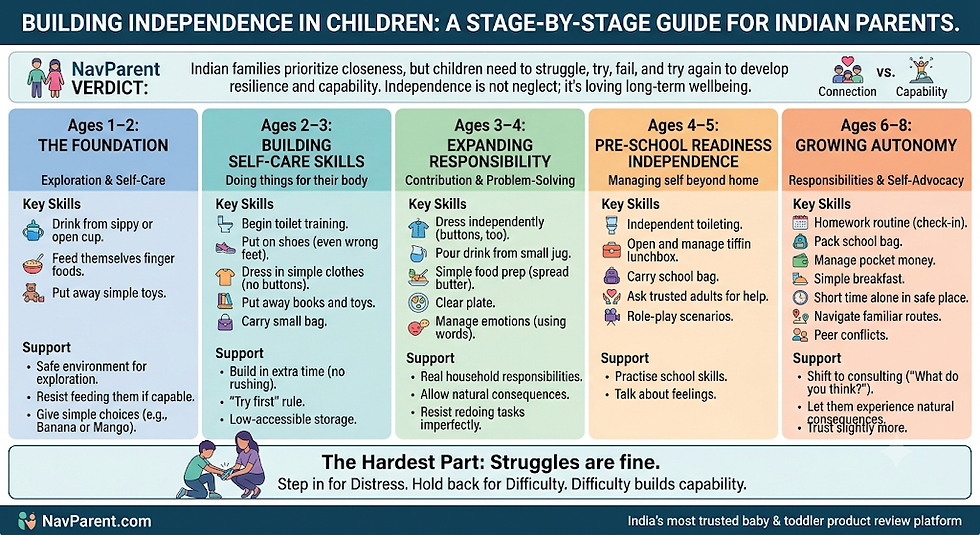
Ages 1–2: The Foundation
What they can begin to do:
• Drink from a sippy cup or open cup (with spills — that's fine)
• Feed themselves finger foods
• Begin to pull off socks and simple clothing items
• Put a toy in a bin when asked
• Indicate needs through pointing, words, or gestures rather than just crying
How to support it:
• Create a safe, baby-proofed environment where exploration is possible without constant correction
• Resist feeding them when they can self-feed (messily)
• Give simple choices: "Banana or mango?" Choice-making is the earliest form of autonomy
What to avoid:
• Anticipating every need before they communicate it — this slows language and self-advocacy development
Ages 2–3: Building Self-Care Skills
What they can learn to do:
• Begin toilet training (most children are ready between 2–3 years)
• Wash hands (with supervision)
• Put shoes on (even if on the wrong feet)
• Dress themselves in simple clothing (elastic waist, no buttons)
• Put books and toys away when asked
• Carry their own small bag or water bottle
How to support it:
• Build in extra time so they can do things at their pace — rushing leads to parental takeover
• Use the "try first" rule: they attempt before you help
• Provide child-accessible storage (low hooks for bags, low drawers for clothes) so self-management is physically possible
What to avoid:
• Dressing them when they can dress themselves (even slowly and imperfectly)
• Carrying everything for them when they can carry their own things
Ages 3–4: Expanding Responsibility
What they can learn to do:
• Get themselves dressed independently (including buttons with practice)
• Pour their own drink from a small jug
• Make a simple snack (spread butter on bread, peel a banana)
• Clear their plate after meals
• Help set the table
• Tidy their own room (with guidance, not perfectly)
• Manage their own emotions using words ("I'm angry" instead of hitting)
How to support it:
• Give real household responsibilities — children this age want to contribute and feel capable
• Allow natural consequences (left toy in the garden = rained on toy) for small, safe situations
• Resist redoing tasks they've done — imperfect is fine
What to avoid:
• Redoing their work in front of them (communicates their effort wasn't good enough)
• Rescuing from frustration too quickly — a child who is struggling but not distressed is learning
Ages 4–5: Pre-School Readiness Independence
What they can learn to do:
• Manage all basic toileting independently
• Open and manage their own lunchbox/tiffin
• Carry their school bag
• Hang up their own bag and shoes when entering home
• Tidy away all their own things
• Wake up with an alarm (with parent nearby)
• Ask a trusted adult for help when they need it
• Manage mild upsets without parental intervention ("work it out" with a peer)
How to support it:
• Practice school-specific skills at home: opening tiffin, managing water bottle, putting on shoes
• Role-play scenarios: "What would you do if you couldn't find your teacher?"
• Talk about their feelings but let them come to solutions sometimes
Ages 6–8: Growing Autonomy
What they can learn to do:
• Manage their homework routine (with parental check-in, not takeover)
• Pack their own school bag
• Manage a small amount of pocket money
• Make their own simple breakfast
• Be home alone for short periods (30–60 minutes) in a safe environment
• Navigate familiar routes (known neighbourhood, familiar school path)
• Handle minor peer conflicts without adult intervention
How to support it:
• Shift from directing to consulting: "What do you think you should do?"
• Let them experience natural consequences of forgotten homework or mismanaged money
• Trust them with slightly more than feels comfortable — that's where growth happens
The Hardest Part: Letting Them Struggle
The moment when a child is frustrated, taking too long, or doing something imperfectly is precisely when most parents step in. This is understandable — it's faster, less messy, and feels caring. But:
• A child who is struggling (but not distressed) is building capability
• A child who is always rescued never discovers they can manage
• "I can do it myself" is one of the most important realisations a child can have
The question to ask yourself: Is my child distressed, or just finding it hard? Hard is fine. Hard is learning. Step in for distress. Hold back for difficulty.
Frequently Asked Questions
My 5-year-old still wants me to dress them. How do I transition?
Start with "try first": they must attempt before you help. Build in extra time so there's no pressure. Lay out simple clothing choices the night before. Most children who are capable will dress themselves when the expectation is clear and consistent — it's often habit, not inability.
My in-laws say I'm being harsh by expecting my child to do things themselves.
Indian family support structures are wonderful, but extended family sometimes interprets age-appropriate independence expectations as strictness. A calm explanation works: "I want her to feel capable and confident. Doing things herself helps build that." Children who can do things for themselves are also easier to manage in school and social settings — which families eventually appreciate.
Is there a difference in how to teach independence to girls vs. boys?
Developmentally, no. The milestones are the same. Culturally, Indian boys are sometimes waited on more than girls (who may be expected to help with chores earlier). Both benefit equally from age-appropriate independence — and both are harmed by too much or too little.
Quick Summary
• Ages 1–2: exploration and beginning self-care
• Ages 2–3: self-dressing, toilet training, carrying their own things
• Ages 3–4: contribution at home, managing emotions, simple food prep
• Ages 4–5: school-readiness independence — tiffin, bag, toileting, asking for help
• Ages 6–8: homework, pocket money, managing responsibilities
• The rule: step in for distress, hold back for difficulty — that's where capability builds
NavParent.com | India's most trusted baby & toddler product review platform

Comments